How Singapore Agencies Are Using AI to Deliver Faster Creative Campaigns
Focused keyphrases: Singapore AI agencies, AI creative campaigns Singapore, faster campaign production, agency AI workflow, AI in advertising Singapore, consumer engagement AI
Speed has always mattered in marketing. But in Singapore’s agency landscape, speed alone is no longer enough. Brands want faster insights, quicker creative turnaround, sharper audience targeting, and measurable performance without sacrificing originality. That pressure is exactly why many agencies are turning to artificial intelligence—not as a gimmick, but as a practical layer across strategy, production, media, and optimisation.
What makes this shift especially interesting is that Singapore sits at a powerful intersection: a digitally mature consumer base, strong regional headquarters presence, multilingual audiences, and a culture that values both efficiency and innovation. In this environment, AI is becoming less of an experimental tool and more of a competitive operating model.
For agencies, the question is no longer whether AI belongs in the creative process. The real question is how to use AI to make campaigns more responsive, more relevant, and more commercially effective while preserving the human judgment that gives ideas emotional power.

Why AI Is Becoming Central to Agency Work in Singapore
The market rewards speed, precision, and adaptation
Singapore brands often operate in categories where campaign cycles are compressed: retail, finance, consumer technology, hospitality, health, education, and regional B2B services. Audiences move quickly, trends change weekly, and media performance can shift in real time. Traditional workflows—brief, concept, production, launch, review—were built for a slower era. AI helps agencies compress these timelines by accelerating research, ideation, versioning, and optimisation.
That matters because modern consumer engagement depends on relevance. A campaign launched too late, or with a message too broad for the intended audience, can lose momentum before it ever gets traction. AI allows agencies to detect patterns earlier, identify audience signals faster, and adapt creative assets as performance data arrives.
Singapore’s digital infrastructure supports AI adoption
Another reason AI is gaining ground is practical readiness. Singapore has high digital penetration, sophisticated e-commerce behaviour, robust adtech usage, and a business environment that generally embraces technology. Government-backed digital transformation efforts and a strong innovation ecosystem have also created conditions where experimenting with AI feels commercially rational rather than culturally risky.
According to Singapore’s Infocomm Media Development Authority, digital capability building has been a major national priority, while global benchmarks from the World Economic Forum repeatedly highlight Singapore’s competitiveness in innovation and technology readiness. For agencies, that translates into clients who are increasingly open to AI-enabled workflows—provided the results are credible and governed responsibly.
Where AI Is Making the Biggest Difference in Creative Campaign Delivery
1. Faster audience and market research
One of the most immediate uses of AI in agencies is in research. Traditionally, gathering competitor intelligence, audience sentiment, keyword trends, platform conversations, and category signals could take days. AI-enabled tools can scan large volumes of public data much more quickly, helping strategists identify emerging themes and pain points in hours rather than weeks.
In Singapore, where campaigns often need to connect with multicultural and multilingual audiences, this speed is especially valuable. Agencies can analyse conversations across English and other commonly used languages, identify audience clusters, and begin shaping strategy with greater confidence.
Research from McKinsey’s State of AI suggests that organisations are increasingly using AI to improve marketing and sales performance, especially in areas involving prediction, personalisation, and process acceleration. Agencies are applying the same principle to campaign planning.
2. Accelerated concept development
The blank page has not disappeared, but AI has changed what happens before the first concept presentation. Creative teams are using AI to generate headline territories, explore campaign routes, test tonal directions, frame audience hypotheses, and build rough narrative structures far more quickly than before.
The important nuance is this: AI may generate options, but experienced creatives still decide what is meaningful. The strongest agencies in Singapore are not handing over creativity to machines. They are using AI to expand the range of possible starting points, helping teams move past obvious ideas faster and spend more time refining the strongest ones.
— A view increasingly echoed across modern creative teams
3. High-volume content versioning
This is where AI becomes commercially transformative. A modern campaign rarely consists of one hero film and a handful of static assets. Brands now need dozens—sometimes hundreds—of versions tailored by platform, audience segment, format, geography, and funnel stage. AI helps agencies create and adapt copy, visuals, call-to-actions, and layout variations at scale.
For Singapore agencies managing regional clients, this can dramatically reduce production bottlenecks. Instead of rebuilding assets from scratch for each market or channel, teams can use AI-assisted workflows to generate multiple versions quickly, then apply human review to ensure brand integrity and cultural relevance.
4. Smarter media and creative optimisation
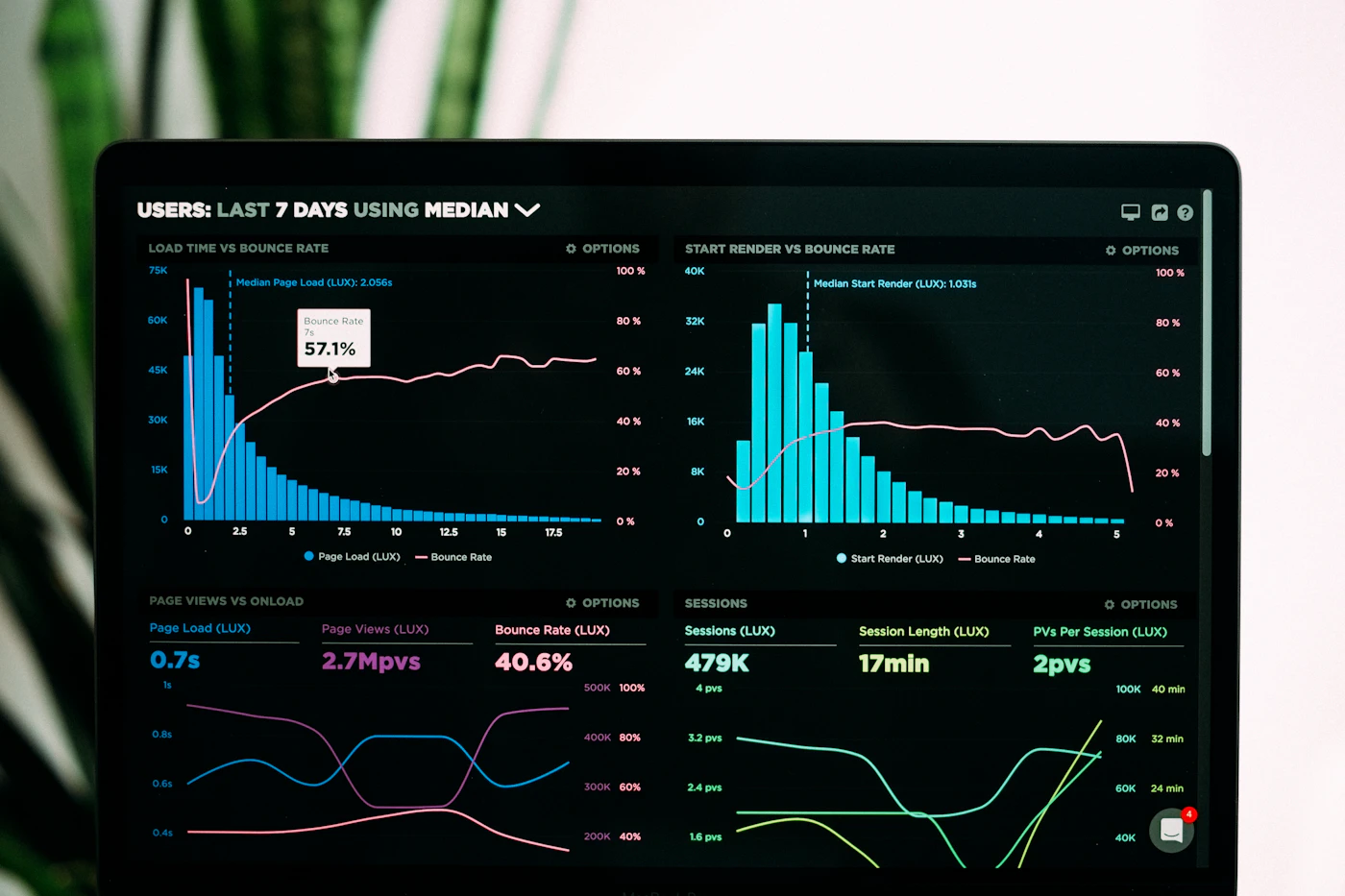
Creative quality and media performance are increasingly inseparable. AI is helping agencies connect the two more intelligently. By analysing engagement signals—click-through rates, view duration, bounce patterns, conversion paths, attention indicators—teams can identify which messages and formats are driving outcomes.
This allows for faster creative iteration. If one message frame is underperforming and another is resonating, agencies can adapt campaign assets during the live cycle rather than waiting for a post-campaign review. In practical terms, AI shortens the distance between insight and action.
Evidence from platforms such as Think with Google and Meta for Business consistently points to the importance of responsive creative and data-informed adaptation in improving campaign effectiveness.
How AI Is Changing Consumer Engagement, Not Just Production Speed
From generic messaging to dynamic relevance
Consumers in Singapore are digitally fluent. They are accustomed to personalisation, quick service, and polished experiences. That means broad, one-size-fits-all campaign messaging often feels outdated. AI allows agencies to identify behavioural patterns and tailor communication around what different audience groups actually care about.
This creates a more responsive form of engagement. Instead of a single message trying to speak to everyone, agencies can build campaign systems with multiple creative routes—each aligned to different motivations, contexts, and stages of readiness. The result is not just faster production but more relevant brand interactions.
Sentiment analysis sharpens tone and timing
One of the most useful AI applications in consumer engagement is sentiment analysis. Agencies can monitor how audiences are reacting to a brand, a category topic, or a live campaign and adjust messaging before momentum declines. This is especially useful in markets where public reaction can shift quickly online.
Sentiment-informed creative helps agencies avoid two common problems: pushing an off-tone campaign into a sensitive moment, or missing an opportunity to amplify a message that is already gaining emotional traction. In short, AI helps make campaign timing more intelligent.
AI supports always-on engagement models
Many brands no longer think in isolated campaign bursts. They operate in an always-on environment where organic content, paid media, CRM, search, partnerships, and community management all interact. AI helps agencies sustain this pace by generating insights continuously, recommending content opportunities, and identifying optimisation actions.
That has changed the economics of engagement. Agencies can now maintain a more active, insight-led presence for clients without requiring every single step to be built manually from the ground up.
The Human Advantage: What AI Still Cannot Replace
Originality still depends on human taste
AI can summarise, sort, remix, and suggest. What it cannot do at a high level is exercise taste in the way great strategists, writers, designers, and creative directors can. Award-winning work rarely emerges from efficiency alone. It emerges from tension, restraint, intuition, emotional intelligence, and the courage to choose a less obvious route.
In Singapore’s competitive agency market, the firms gaining the most from AI are those that use it as a multiplier for human capability rather than a substitute for it. They let machines handle scale and speed while people remain responsible for distinction and meaning.
Brand safety, nuance, and cultural intelligence matter
Singapore campaigns often sit within a nuanced cultural environment. Messaging may need to resonate across different age groups, communities, and regional business stakeholders. AI-generated outputs can be useful, but they still require review for tone, sensitivity, compliance, and local context.
That is especially true in sectors like finance, healthcare, public messaging, and education, where trust is central. AI may support production, but accountability still belongs to human teams.
A Practical Look at the AI-Enabled Agency Workflow
Step 1: Brief analysis and insight gathering
Agencies begin by using AI-assisted tools to organise the client brief, identify information gaps, pull market trends, review competitor positioning, and map relevant audience themes. This shortens the strategic discovery phase considerably.
Step 2: Territory generation and creative exploration
Teams use AI to surface possible campaign angles, audience hooks, tonal frames, messaging hierarchies, and copy variations. The strongest routes are then refined by human creatives who align them with brand voice and business goals.
Step 3: Asset production at scale
Once a creative route is approved, AI can assist with script drafting, visual adaptation, resize recommendations, language variants, product copy, email subject lines, social captions, and paid ad iterations.
Step 4: Live optimisation and reporting
After launch, AI helps identify performance trends faster, making it easier to adjust creative, shift spend, prioritise audience segments, and improve conversion pathways. Reporting also becomes more dynamic and easier for clients to act on.
Simple Chart: Where AI Delivers Agency Speed Gains
| Agency Function | Traditional Timeline | AI-Enabled Timeline | Main Benefit |
|---|---|---|---|
| Audience research | Several days | Hours | Faster strategic clarity |
| Concept ideation | Days to weeks | Same day to days | More routes explored quickly |
| Content versioning | Resource-heavy | Automated assistance | Scale without massive delays |
| Performance optimisation | Reactive review cycles | Near real-time | Better campaign efficiency |
The Risks Agencies Need to Manage Carefully
Speed can create sameness
One danger of AI-assisted creativity is that if everyone uses similar tools in similar ways, outputs can start to feel familiar. Faster campaign development is valuable, but not if it leads to a flood of interchangeable messaging. Agencies need strong editorial and creative standards to prevent this.
Governance is part of the value proposition
Clients are increasingly asking how AI is being used, what data is involved, and how outputs are reviewed. The agencies best positioned for long-term growth are the ones that can explain their AI governance clearly: what is automated, what is human-reviewed, how intellectual property risks are managed, and how brand safety is protected.
Frameworks from organisations such as the OECD AI Principles and thought leadership from Gartner Marketing continue to underline the importance of responsible deployment, transparency, and oversight.
What This Means for Brands Choosing an Agency in Singapore
Ask how AI improves outcomes, not just efficiency
Any agency can claim to use AI. The more useful question is whether that usage produces better work. Does it sharpen strategy? Improve responsiveness? Increase creative testing capacity? Reduce wasted production time? Strengthen engagement rates? AI should not just make things faster; it should make them smarter.
Look for a balance of systems and imagination
The ideal agency is not one that automates everything. It is one that knows where automation creates leverage and where human craft creates advantage. In practice, that means combining data fluency, creative excellence, operational speed, and strategic judgment.
- How do you use AI in strategy, creative, and optimisation?
- What is reviewed by human experts?
- How do you protect brand tone and distinctiveness?
- Can you show evidence that AI-assisted workflows improve campaign results?
The Next Competitive Edge for Singapore Agencies
Faster campaigns are only the beginning
The most sophisticated Singapore agencies are moving beyond simple efficiency gains. They are using AI to build adaptive campaign systems: modular creative frameworks, predictive audience models, live testing ecosystems, and more intelligent reporting environments. That shift changes the agency role itself—from maker of isolated assets to orchestrator of continuous consumer engagement.
Over time, this will likely separate the market into two groups: agencies that use AI as a production shortcut, and agencies that use AI as a strategic amplifier. The latter are more likely to produce work that is not only efficient, but memorable, differentiated, and commercially effective.
Creative confidence will matter more, not less
As AI lowers the cost of generating content, the value of creative conviction rises. When more brands can produce more material more quickly, distinctiveness becomes the scarce asset. Agencies that understand this will not chase volume for its own sake. They will use AI to free up energy for the harder, more valuable work: building ideas that audiences actually remember.

Final Thought
AI is reshaping agency operations in Singapore because it solves a pressing business problem: the need to create high-quality campaigns at the pace of modern consumer behaviour. But the agencies seeing the greatest benefit are not those that simply automate more. They are the ones that combine AI speed, human originality, and disciplined consumer insight.
That combination is what turns faster campaign delivery into better brand performance. It is also what makes consumer engagement feel less like a sequence of outputs and more like a living conversation between brand and audience.
If your brand is exploring how AI can improve strategy, content production, personalisation, and campaign performance, it may be time to speak with Brandlab. A thoughtful conversation can help clarify where AI creates real commercial value—and where human creativity should lead.
Suggest getting in contact with Brandlab to discuss how an AI-enabled creative model can support stronger engagement, faster execution, and more distinctive campaign outcomes.
Recommended Research Links
For additional evidence and third-party reading:
- McKinsey — The State of AI
- Think with Google — Marketing and consumer insight research
- Meta for Business — Advertising and creative effectiveness updates
- OECD — AI Principles and policy guidance
- IMDA Singapore — Digital transformation and innovation context
- World Economic Forum — Technology and competitiveness insights