Why Rhode Is Becoming a Blueprint for Modern Beauty Brands
Focused keyphrase: Why Rhode Is Becoming a Blueprint for Modern Beauty Brands
What makes a beauty brand feel inevitable rather than merely popular? Why do some launches create a ripple, while others command a movement? And why does one clean, minimal skincare label suddenly become the reference point for founders, marketers, and creative agencies trying to build the next iconic consumer brand?
That is exactly the conversation surrounding Rhode. In a market crowded by celebrity-backed labels, trend-fuelled campaigns, and endless product drops, Rhode has managed to separate itself with something that many brands chase but few truly achieve: clarity. Not just visual clarity. Not just product simplicity. Strategic clarity.
Rhode is becoming a blueprint for modern beauty brands because it understands a powerful truth: today’s audience does not simply buy products. They buy into worlds, rituals, design codes, founder energy, cultural relevance, and the feeling that a brand understands their lifestyle before they even say a word.
For founders, marketing teams, and ambitious beauty businesses, this matters. Because Rhode’s rise is not just a celebrity story. It is a case study in brand positioning, community building, product restraint, and emotionally intelligent storytelling. It demonstrates what is possible when a brand stops trying to be everything and starts becoming unforgettable for something specific.
The Beauty Industry Has Changed, and Rhode Understood the Assignment Early
The beauty sector is no longer driven by shelf presence alone. Today, digital-native beauty brands are judged at speed, in public, and through culture. Consumers discover new products on TikTok, validate them on Instagram, research ingredients on retail sites, seek editorial approval from beauty publications, and make purchase decisions based on visual identity as much as efficacy.
Rhode entered an environment where attention is fragmented and trust is hard-won. Instead of overwhelming consumers with complexity, it delivered a proposition that felt calm, believable, and editorially coherent. The brand did not appear to chase every category, every claim, or every seasonal trend. It focused on a tightly edited point of view.
This is especially important in a world where shoppers are fatigued by over-choice. According to reporting and market analysis from sources such as McKinsey’s beauty industry insights, beauty remains one of the most resilient and fast-evolving consumer categories, but growth is increasingly being captured by brands that understand identity, experience, and relevance.
Minimalism Became More Than a Design Choice
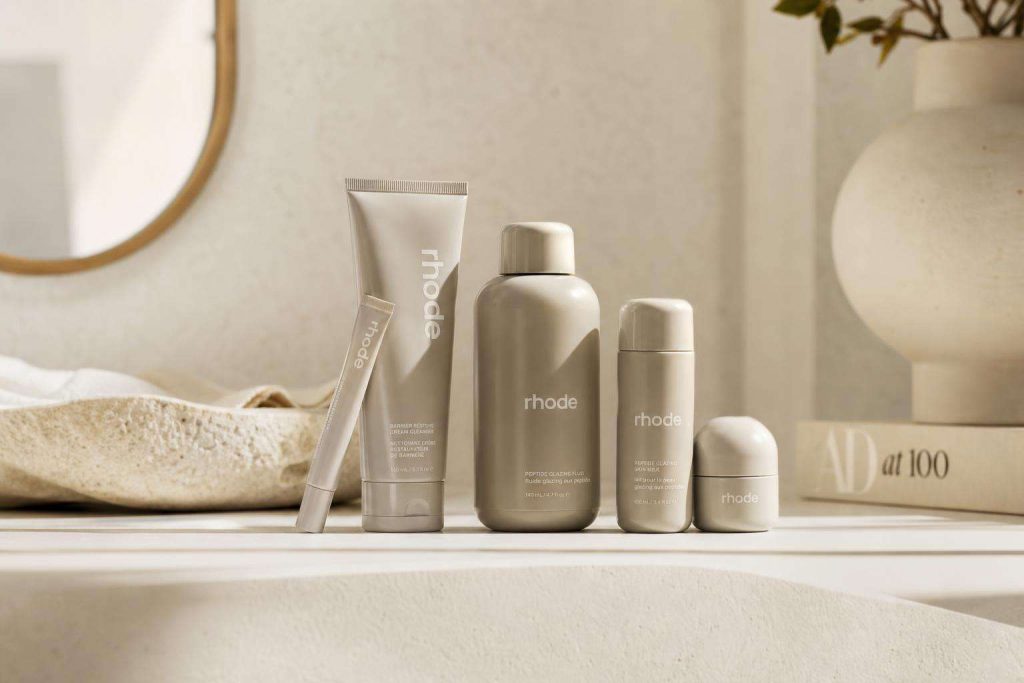
Minimalism in Rhode’s world is not empty aesthetics. It acts as a signal. It says the brand knows what it stands for. It suggests confidence. It creates an atmosphere that feels premium without being cold, accessible without being generic. In branding terms, this is powerful because visual simplicity often amplifies memorability.
Consumers are bombarded with noise. So when a beauty brand creates a more distilled, recognisable image system, it gives people something easier to remember, share, and return to. Rhode has used this principle exceptionally well.
Celebrity Was the Door, but Brand Discipline Built the House
Plenty of celebrity beauty brands launch with huge awareness. Far fewer sustain credibility. Rhode has benefited from Hailey Bieber’s profile, of course, but awareness alone does not create a repeat-purchase brand. What Rhode demonstrates is that celebrity can ignite interest, but brand discipline turns curiosity into long-term value.
That distinction matters. A founder’s fame may create the first click. It is the product promise, the sensory appeal, the social proof, the branding architecture, and the consistency of experience that create the second, third, and tenth sale.
Rhode’s Brand Strategy Feels Modern Because It Understands Restraint
One of the most compelling lessons Rhode offers is that growth does not always come from doing more. Often, it comes from doing fewer things with greater intentionality.
In beauty, it can be tempting to launch fast and wide: cleansers, toners, serums, masks, lip care, fragrance, bodycare, makeup hybrids, accessories, limited editions, and collaborations all within a short period. The risk is obvious. When everything is urgent, nothing feels essential.
Rhode instead built momentum around a carefully chosen product range and a strong central narrative. This creates three major advantages:
| Strategic Choice | Why It Works | Brand Impact |
|---|---|---|
| Tight product edit | Reduces confusion and sharpens positioning | Makes hero products easier to remember |
| Consistent visual language | Builds instant recognition across channels | Strengthens recall and social sharing |
| Founder alignment | Connects personal image to product desirability | Creates trust and cultural relevance |
| Lifestyle-led storytelling | Moves product from function to aspiration | Encourages identity-based buying |
The Power of the Hero Product
Modern brands win when they own a mental shortcut in the consumer’s mind. Rhode has understood the value of the hero product strategy. Instead of diffusing attention across dozens of SKUs, the brand allows consumers to latch onto products that become social talking points, beauty-bag staples, and visually shareable symbols of the brand itself.
This is not just good merchandising. It is excellent psychology. People remember what is distinct. They repeat what is easy to describe. They recommend what fits neatly into a sentence: “You need this.” That kind of advocacy cannot be manufactured through ad spend alone.
Rhode Succeeds Because It Turns Product Into Culture
There are beauty brands that launch products, and there are beauty brands that create cultural signals. Rhode is increasingly operating in the second category. That is why it feels less like a transient success and more like a reference point.
Its products are not presented only as solutions to skincare concerns. They are woven into a lifestyle language of glow, simplicity, elevated essentials, off-duty polish, and tactile luxury. This matters because people rarely share products online simply because they work. They share them because the product says something about who they are.
Publications including The Business of Fashion and trend-focused consumer analysis from outlets like Vogue Business Beauty routinely explore how modern beauty growth is tied to community, aesthetics, and cultural resonance. Rhode exemplifies this shift.
Aspirational, But Not Untouchable
The best beauty branding creates aspiration without alienation. Rhode appears polished, but still usable. Elevated, but still everyday. For consumers, that balance is magnetic. It allows them to feel they are buying into a premium world without feeling excluded from it.
This is one of the most difficult branding tensions to master. Lean too far into luxury and the brand becomes emotionally distant. Lean too far into accessibility and it can lose distinction. Rhode walks that line in a way many emerging brands would be wise to study.
What Beauty Founders and Brand Teams Can Learn From Rhode
If you are building a beauty brand today, Rhode’s rise should not make you think, “We need a celebrity founder.” It should make you ask a far more useful set of questions.
Do we have a clear point of view?
Does our packaging reflect our promise?
Can someone understand our brand in five seconds?
Are we launching products people will remember, or just products we hope will sell?
Are we building a brand world, or only filling a product catalogue?
These are the questions that separate fast launches from enduring brands.
Clarity Beats Complexity
Many brands still think more messaging equals more persuasion. In reality, the opposite is often true. Clarity wins. Focus wins. A single compelling promise repeated beautifully across every touchpoint often achieves more than ten vague claims competing for attention.
Rhode shows what happens when a brand strips away excess and sharpens what remains. The lesson for beauty founders is simple but demanding: be brave enough to choose.
Consistency Builds Trust Faster Than Novelty
Consumers notice when brands change voice, visuals, pace, and positioning too often. It signals uncertainty. Rhode’s consistency makes the brand feel intentional, and intentional brands are easier to trust.
That is a major insight for businesses trying to scale. Before adding more campaigns, more content, more offers, and more channels, ask whether your current system is delivering one clear, compelling identity.
The Data Behind the Opportunity in Modern Beauty Branding
The global beauty market continues to show resilience and innovation potential, particularly in skincare and prestige-adjacent sectors. Research from sources like Statista’s cosmetics industry overview and category reporting from Mintel Beauty & Personal Care reinforce a critical point: consumers are willing to spend when brands offer trust, efficacy, and identity value.
That final point—identity value—is where Rhode is especially relevant. A modern beauty brand must do more than function on a product level. It must make sense in a social feed, in a customer’s bathroom, in creator content, in editorial coverage, and in the broader emotional life of the buyer.
Modern Beauty Is Omnichannel in Meaning, Not Just Distribution
Too many businesses hear “omnichannel” and think only about retail expansion. But omnichannel branding also means semantic consistency. Is the brand equally recognisable on its website, in press coverage, on influencer shelves, in paid media, and in user-generated content?
Rhode performs strongly because its meaning travels well. That is a strategic advantage, not a lucky accident.
Why This Matters for Brands Working With Creative Growth Partners
This is where the conversation turns from observation to opportunity. Because recognising why Rhode works is one thing. Translating those lessons into your own beauty brand, wellness company, lifestyle business, or premium product venture is another.
That is where expert strategic and creative guidance becomes invaluable.
If your brand is struggling to stand out, if your product line feels too broad, if your social presence lacks coherence, or if your market positioning sounds like everyone else in the category, the solution is not to simply produce more content and hope for a breakthrough. The solution is to build a sharper brand system.
What Is Possible When Strategy and Creativity Align?
Imagine your brand with a clearer identity, a stronger customer proposition, more magnetic creative direction, and a sharper path to growth. Imagine product launches that feel anticipated rather than announced. Imagine a website that converts better because every word and image supports the same strategic message. Imagine packaging that people want to leave out, photograph, and talk about. Imagine social content that starts looking less like brand maintenance and more like market leadership.
Why not get the solution?
If Rhode’s rise proves anything, it is this: brands do not need to be louder to become category-defining. They need to become clearer, more intentional, and more emotionally resonant.
The Future of Beauty Belongs to Brands With a Point of View
Rhode is becoming a blueprint for modern beauty brands because it captures the defining characteristics of the next era: precision, identity, cultural fluency, visual consistency, and emotional relevance.
It understands that consumers are not simply shopping for skincare. They are shopping for trust. For taste. For simplicity. For aspiration. For products that fit naturally into the stories they tell themselves and others.
That is why Rhode matters far beyond its own shelf. It is a living example of what happens when a brand knows exactly who it is, what it is selling beyond the formula, and how to deliver that promise repeatedly in a way people can feel.
The Brands That Will Lead Next Are Deciding Right Now
So here is the real question. Is your brand positioned for the market as it was, or the market as it is becoming?
Are you building a catalogue, or a code people want to join?
Are you selling products, or shaping desire?
Are you asking your audience to notice you, or giving them a reason to remember you?
The opportunity is not small. It is enormous. Consumers are still searching for the next brand that feels honest, elevated, useful, beautiful, and worth belonging to. With the right strategy, there is no reason that brand cannot be yours.
If you can see the gap between where your brand is and where it could be, that is the moment to act. Contact Brandlab and start building a beauty brand people do not just purchase, but believe in.
Suggested next step: If your team is ready to sharpen your brand strategy, refine your visual identity, or create a more powerful growth story, get in touch with Brandlab and explore what your next chapter could look like.
172218