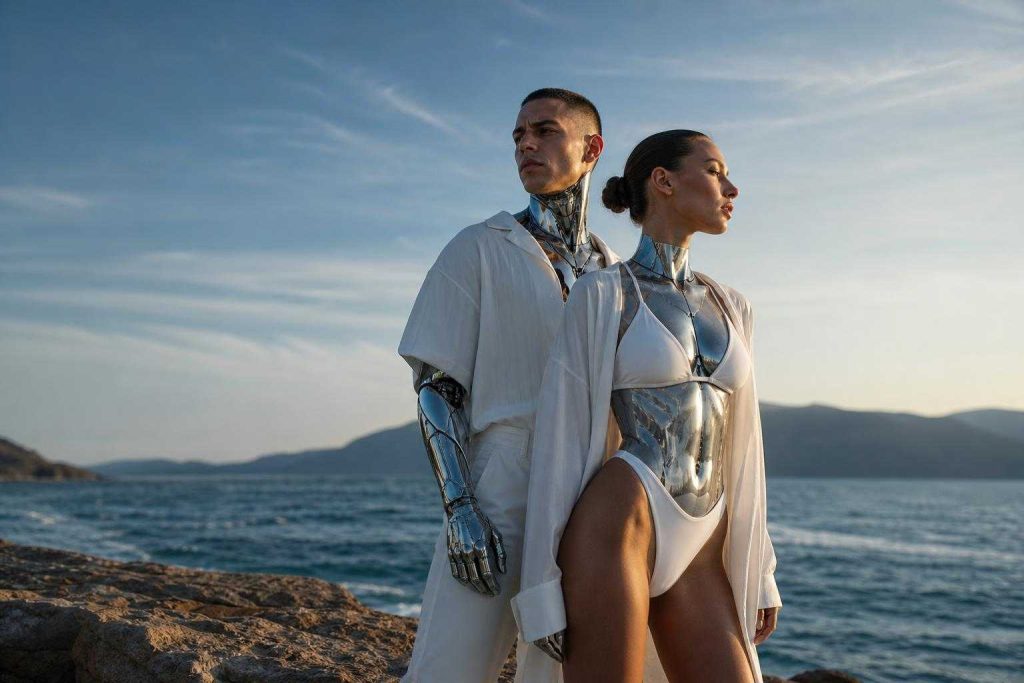
How Nike’s CMO Strategy Turns Culture Into Revenue Growth
Focused keyphrase: How Nike’s CMO Strategy Turns Culture Into Revenue Growth
SEO keywords: Nike marketing strategy, CMO strategy, culture marketing, brand growth, revenue growth strategy, sports marketing, emotional branding, consumer engagement, Brandlab strategy, modern brand leadership
Some brands sell products. Nike sells meaning. That is the difference. And it is exactly why marketers, founders, and growth leaders keep studying Nike’s playbook year after year.
At the center of Nike’s enduring power is not just product innovation or celebrity sponsorship. It is a CMO strategy that transforms culture into commercial momentum. Nike does not merely react to trends; it identifies values, tensions, aspirations, and identities already moving through society—then turns them into campaigns, communities, and ultimately, revenue.
That is what modern brand leadership looks like. Not louder messaging. Not more content for the sake of it. But a strategic system where brand, culture, data, storytelling, and demand creation all work together.
If you are asking how a company can remain globally iconic while still feeling personal, urgent, and of-the-moment, Nike provides one of the clearest answers in business. And if your brand is trying to create stronger customer demand, loyalty, and pricing power, the bigger question is this: why not get the solution?
Culture Is Not a Side Story. It Is the Strategy.
Nike’s CMO approach is powerful because it understands something many companies still miss: culture is not decoration around the brand—it is the operating environment of the brand. People buy products, yes. But they also buy identity, aspiration, belonging, and signals about who they are or who they want to become.
The brilliance of Nike is that it consistently locates itself inside those human stories. Athletic achievement is only the surface. Underneath that, Nike speaks to resilience, self-belief, equality, community, individuality, rebellion, and progress. These are cultural themes, not simply product claims.
Why this matters to revenue
When a brand becomes culturally meaningful, three commercial effects tend to happen:
- Attention becomes easier to earn because people care about what the brand says.
- Loyalty strengthens because customers feel aligned with the brand’s worldview.
- Price sensitivity reduces because the brand offers emotional and symbolic value, not just functional value.
That is the hidden multiplier behind Nike’s marketing. It is not just running ads. It is creating a framework where people see themselves reflected in the brand. This drives repeat purchase, affinity, advocacy, and higher lifetime value.
“Nike’s genius is that it makes performance feel personal and culture feel wearable.”
— Common view echoed across brand strategy analysis
The Nike CMO Playbook: Turning Meaning Into Market Share
To understand How Nike’s CMO Strategy Turns Culture Into Revenue Growth, it helps to break the model into its most important components. Nike’s success is not accidental. It is a repeatable strategic pattern.
1. Build campaigns around belief, not just benefit
Many brands still market products through specifications, seasonal promotions, or performance claims. Nike does something broader. It markets through belief systems. “Just Do It” was never simply a slogan; it became a philosophy that could stretch across sports, generations, and geographies.
This is one reason Nike’s messaging travels so far. Product benefits age. Cultural beliefs scale.
For evidence of Nike’s long-standing positioning and the significance of “Just Do It,” see reporting and brand analysis from sources such as Nike and historical overviews like Encyclopaedia Britannica’s Nike profile.
2. Spot cultural tension before competitors do
Elite CMOs do not just identify audiences; they identify tensions. What are people struggling with? What identities are emerging? What conversations are changing? Nike has repeatedly leaned into themes such as women in sport, athlete activism, inclusivity, streetwear identity, and youth self-expression.
That gives the brand relevance beyond transactions. It becomes part of the conversation people are already having.
For broader context on Nike’s strategic positioning and financial reporting, review investor materials at Nike Investor Relations.
3. Use athletes as cultural translators
Nike’s athlete partnerships do more than add star power. They act as cultural translation mechanisms. Athletes embody struggle, aspiration, excellence, activism, style, and influence. The right partnership allows Nike to express values through people, not just through copy.
This matters because audiences trust lived narratives more than brand declarations. A campaign can say, “believe in something.” An athlete can make that line feel real.
4. Connect brand storytelling with direct commercial paths
One of the most misunderstood things about brand marketing is the assumption that emotional storytelling cannot be measured commercially. Nike proves the opposite. Its strongest campaigns create emotional momentum at the top of the funnel while digital commerce, membership ecosystems, apps, drops, and retail experiences convert that energy into buying behavior.
Culture alone is not enough. Culture plus conversion architecture is what creates revenue growth.
How Cultural Relevance Creates Revenue Leverage
Marketers often ask: where is the ROI in cultural branding? The answer is that cultural relevance improves performance across multiple commercial layers at once.
| Strategic Lever | Cultural Effect | Revenue Outcome |
|---|---|---|
| Brand Purpose | Builds emotional connection and identity | Higher loyalty and repeat purchase |
| Athlete & Creator Partnerships | Increases credibility and visibility | Faster demand generation |
| Community Engagement | Strengthens belonging and advocacy | Improved lifetime value |
| Digital Ecosystem | Captures and nurtures intent | Higher conversion efficiency |
| Consistent Narrative | Improves memorability and trust | Greater long-term brand equity |
That table tells an important story: Nike does not separate brand building from demand generation. It aligns them. This is why its marketing remains a benchmark. The campaign is not the finish line; it is the ignition system.
Nike Understands Modern Identity Better Than Most Brands
One of Nike’s biggest strategic strengths is how well it understands identity formation. Consumers today are not simply buying to satisfy need. They are curating who they are through choices, affiliations, aesthetics, and values.
Nike lives at that intersection of performance and self-expression. A running shoe can be a performance tool, a fashion statement, a belonging signal, or a motivational symbol—all at once. Great CMOs know that products do not live in one dimension anymore. They live in social feeds, communities, style systems, and personal narratives.
The emotional architecture behind the brand
Nike’s storytelling regularly taps into emotional drivers such as:
- Ambition — the desire to become more
- Courage — the ability to act despite fear
- Resilience — pushing through adversity
- Belonging — being part of a movement or shared mindset
- Recognition — being seen
- Self-definition — deciding who you are on your own terms
That emotional architecture is not random creativity. It is strategic demand creation. People remember what makes them feel something. They share what reflects them. They buy what helps express them.
CMO Strategy Today: What Other Brands Can Learn From Nike
Not every company has Nike’s budget, cultural presence, or athlete roster. But that does not mean Nike’s strategy is out of reach. In fact, the biggest lessons are highly transferable.
Lesson 1: Stop leading with features
Ask yourself: is your brand communicating what it sells, or what it makes possible? Customers may compare features, but they commit to meaning. The strongest brands know how to move from “what this is” to “why this matters.”
Lesson 2: Find your cultural lane
You do not have to comment on every trend. You do have to understand the world your audience is living in. What pressures are shaping them? What aspirations keep surfacing? What shift in behavior or identity gives your brand a legitimate voice?
That is where strategic positioning starts. Not in generic messaging—but in a sharp understanding of relevance.
Lesson 3: Design a journey from story to sale
Award-winning campaigns are not enough if they create applause without action. Nike succeeds because it links inspiration to pathways: membership, digital engagement, launches, content ecosystems, stores, e-commerce, and product drops. Every great story needs a next step.
Lesson 4: Build consistency without becoming predictable
Nike is remarkably consistent in belief but flexible in execution. That is a masterclass in modern brand management. The core message stays emotionally recognizable, while the content evolves with culture.
This balance matters. If your brand keeps changing what it stands for, trust weakens. If your brand never evolves how it shows up, relevance fades.
The Numbers Mindset Behind the Emotion
Some leaders still separate “creative branding” from “hard business results.” Nike’s model shows that this is a false divide. Strong creative work is often what gives performance marketing its power. Why? Because conversion improves when awareness is stronger, trust is higher, recall is deeper, and desire is already activated.
Nike’s business updates and investor communications consistently emphasize direct relationships, innovation, market positioning, and digital strength—core evidence that brand and commercial systems are deeply connected. You can review official performance perspectives through Nike’s news and reports archive.
A simple chart: the Nike-style growth chain
| Step | What Happens |
|---|---|
| 1. Cultural Insight | Brand identifies a relevant social or emotional truth |
| 2. Storytelling | Campaign expresses the truth through compelling narrative |
| 3. Amplification | Athletes, creators, media, and communities spread the message |
| 4. Engagement | Audience interacts, shares, explores, and identifies with the brand |
| 5. Conversion | Demand moves into product purchase and membership behavior |
| 6. Long-Term Equity | Brand meaning compounds, making future growth more efficient |
The Hard Question for Your Brand
Here is the question many leadership teams avoid: is your marketing visible, or is it valuable?
Visibility can be purchased. Value must be built.
Nike’s CMO strategy works because it creates value in the mind of the audience before the product ever reaches checkout. By the time the consumer is deciding, much of the selling work has already been done through identity, trust, emotional resonance, and cultural familiarity.
So what about your brand?
- Are you telling a story people actually want to join?
- Are you connecting with culture in a way that feels authentic?
- Are you giving customers a reason to care beyond price?
- Are you turning attention into a strategic growth system?
If not, why not get the solution?
“The best marketing does not push people toward a product. It pulls them toward a version of themselves.”
— A principle that captures why culture-led branding performs so strongly
Why Brandlab Is the Right Conversation to Have Now
If Nike shows what is possible, the next step is translating those principles into your market, your audience, and your commercial goals. That is where Brandlab comes in.
Brandlab can help businesses move from fragmented marketing activity to a more coherent growth engine—one rooted in positioning, message clarity, cultural relevance, compelling creative, and conversion-focused execution.
What working with Brandlab can unlock
- Sharper brand positioning that distinguishes you from competitors
- Campaign strategy built on audience insight and cultural relevance
- Messaging frameworks that sell belief, not just benefits
- Creative systems that drive both emotional connection and action
- Digital pathways that convert brand attention into measurable growth
In a crowded market, the answer is rarely “do more marketing.” The answer is to do more meaningful marketing. Strategic. Memorable. Commercially intelligent. Distinctive enough to earn attention and disciplined enough to convert it.
Final Thought: Culture Compounds
How Nike’s CMO Strategy Turns Culture Into Revenue Growth is ultimately a story about leverage. When a brand understands people deeply, reads the cultural moment well, and builds a system that links emotion to action, growth becomes more scalable.
Nike reminds us that the future belongs to brands that can do three things at once: stand for something, move with culture, and convert attention into business results.
That is not easy. But it is possible.
And if your brand is ready to become more relevant, more memorable, and more commercially effective, then perhaps the better question is not whether you should act. It is this:
Why wait to build the kind of brand people choose, believe in, and come back to?
Get in contact with Brandlab and start building a strategy that does more than communicate. Build one that moves culture, earns trust, and drives revenue growth.
Further Reading and Evidence
- Nike Investor Relations
- Nike News, Events and Reports
- Nike Official Website
- Britannica: Nike, Inc.
- Forbes Company Profile: Nike
167326