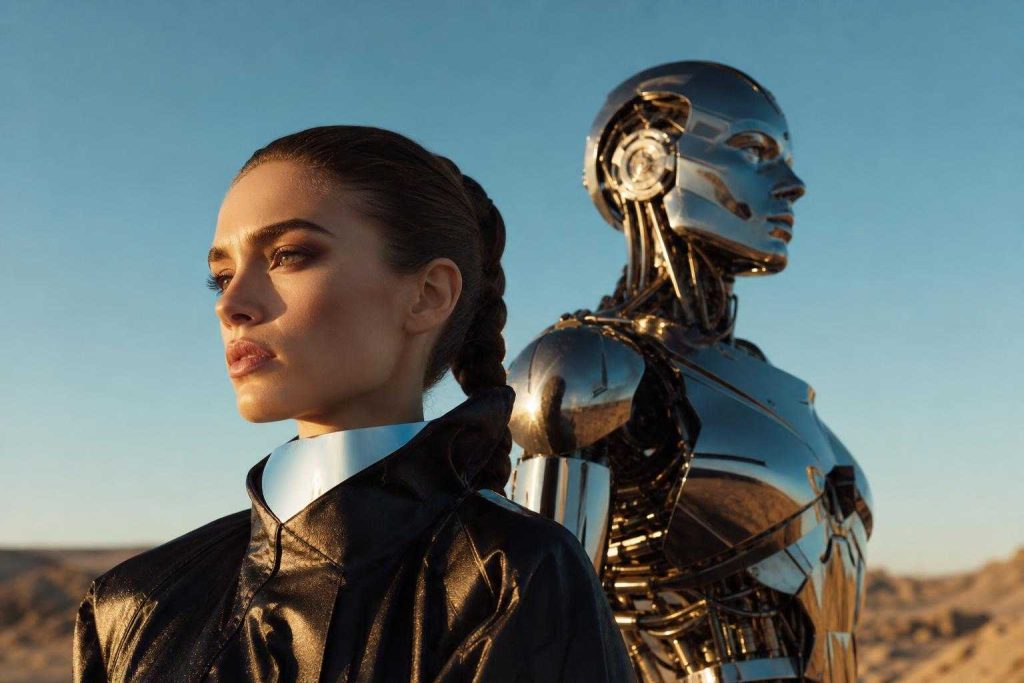
The Secret to Higher Conversion Rates: AI Creative Optimization
What if your next campaign didn’t just look better—but performed better, learned faster, and converted more of the people already visiting your site?
That is the promise, and increasingly the reality, of AI Creative Optimization. In a market where attention is fragmented, acquisition costs are rising, and customers expect relevance at every touchpoint, brands can no longer rely on guesswork, static creative, or one-size-fits-all messaging. The brands pulling ahead are doing something different: they are using artificial intelligence to shape, test, refine, and scale creative assets with precision.
The result is not just better-looking ads or cleverer headlines. It is a measurable lift in conversion rates, stronger engagement, lower wasted spend, and a faster path from audience interest to action.
If your creative is the engine of modern growth, then AI-powered optimization is the system that keeps that engine tuned, responsive, and ready to win.
Why creative has become the new performance battleground
There was a time when media buying alone could rescue an average campaign. That era is fading fast. Today, even the most sophisticated targeting has limits when the ad itself fails to connect. Platforms are more automated. Privacy changes have reduced reliance on granular tracking. Audiences are overwhelmed with options. In that environment, creative quality has become one of the biggest differentiators in campaign success.
The cost of uninspired creative
When creative is weak, every part of performance suffers. Click-through rates dip. Landing page engagement falls. Conversion intent weakens. Retargeting becomes less effective. Teams often blame budget, targeting, or timing—when the real issue is that the message, image, video, or offer never truly resonated.
Meta has repeatedly emphasized the importance of creative diversification and testing in ad performance. Their own business resources highlight how varied creative assets can help improve campaign outcomes by matching different messages to different audience signals. Evidence of this shift can be seen in Meta’s guidance for advertisers:
Meta’s AI-powered ads guidance.
Why human instinct alone is no longer enough
Creative instinct still matters. Great brand storytelling still matters. But instinct without insight can be expensive. When teams make creative decisions based only on personal taste, internal opinions, or outdated assumptions, they overlook the real-world behavior patterns that determine performance. AI Creative Optimization fills that gap by identifying what is actually working across formats, channels, segments, and moments.
Ask yourself: how many of your campaigns are being shaped by evidence rather than assumption?
What is AI Creative Optimization?
AI Creative Optimization uses machine learning, pattern recognition, predictive analysis, and automated testing to improve the performance of creative assets across digital channels. That includes:
- Ad copy
- Headlines
- Video hooks
- Static imagery
- Calls to action
- Landing page messaging
- Email creatives
- Personalized content variants
Rather than treating creative as a fixed final product, AI sees it as a dynamic growth lever—something that can be constantly analyzed, adjusted, and improved.
How it works in practice
AI systems can evaluate thousands of combinations of text, layout, visuals, timing, and audience response. They detect patterns that would be almost impossible for a human team to catch consistently at scale. Maybe one color palette performs better with first-time visitors. Maybe shorter headlines convert mobile users more effectively. Maybe social proof boosts add-to-cart rates for one audience, while urgency messaging performs better for another.
Instead of relying on occasional A/B testing alone, AI can continuously optimize creative based on ongoing performance inputs.
Google has documented how automation and machine learning increasingly shape ad performance and creative effectiveness across its advertising ecosystem. Their overview of AI-powered advertising provides useful context here:
Google on AI in advertising.
“The best-performing creative today doesn’t happen by accident. It happens when insight, experimentation, and speed come together.”
Why that matters: If your competitors are learning in real time and your team is still debating subjective preferences, they will improve faster than you.
The real reason AI improves conversion rates
Higher conversion rates do not appear from technology alone. They happen because AI improves the specific factors that persuade people to act.
1. Better message-audience fit
People convert when they feel understood. AI helps brands deliver messages more aligned to user intent, behavior, device type, and stage of journey. Instead of making one broad message do all the work, you create more relevant variations for different people.
2. Faster creative learning cycles
Traditional campaign cycles can be painfully slow. Build creative. Launch. Wait. Review. Debate. Revise. Relaunch. AI compresses that loop. It can spot performance signals early and recommend or automate winning adjustments. That speed compounds into major gains over time.
3. Smarter testing at scale
Many teams talk about testing but only test a handful of ideas. AI expands what is possible. It can compare multiple headlines, visual treatments, CTA language, emotional tones, and value propositions at once. More tests mean more learnings. More learnings mean more conversions.
4. Less spend wasted on underperforming assets
Every weak creative variation costs money. AI helps identify poor performers earlier, reducing ad fatigue and improving budget allocation. You stop paying for creative that simply is not persuasive enough.
5. Personalization without chaos
Personalization used to be difficult to scale. AI changes that. It makes it easier to deliver creative that feels specific while still operating efficiently across campaigns and channels.
High-impact use cases for AI Creative Optimization
Not every brand is at the same maturity level, but nearly every growth-focused business can apply AI-powered creative optimization in practical ways.
Paid social campaigns
Social platforms move quickly, and audience attention is fragile. AI helps brands identify which creative combinations generate the strongest engagement and downstream conversion actions. This is especially powerful for testing hooks, offers, UGC-style content, short-form video, and mobile-first formats.
Search and performance creative
On search and performance max environments, AI can optimize headlines, descriptions, asset combinations, and supporting visual content. The goal is not just visibility, but relevance that drives action.
Email marketing
AI can improve subject lines, preview text, email layout, imagery choices, timing, and offers. If your open rates are reasonable but click and conversion rates lag, creative optimization is often the hidden opportunity.
Landing pages
Even a great ad can fail on a weak page. AI can support testing of page copy, visual hierarchy, CTA placement, trust signals, testimonials, and form length to improve conversion rate optimization.
Ecommerce product marketing
From product descriptions to promotional image sequences, AI can help ecommerce brands understand what moves browsers to buyers. This is especially useful in fast-moving sectors where seasonality, pricing, and promotions shift constantly.
What the data says about AI and performance marketing
The conversation around AI often becomes abstract, but the evidence is growing. Major platforms, analytics providers, and marketing technology companies continue to document the performance value of AI-assisted optimization.
McKinsey has explored how personalization and data-driven experiences can drive meaningful business value, including improved acquisition and retention. Their research on personalization is relevant to any discussion of AI-led creative strategy:
McKinsey on personalization value.
Meanwhile, Think with Google has published extensive research showing that consumers respond to relevance, speed, and useful experiences across the journey:
Think with Google research hub.
Performance comparison snapshot
| Approach | Creative Process | Testing Speed | Personalization Potential | Conversion Impact |
|---|---|---|---|---|
| Traditional creative | Manual, slower, opinion-led | Limited | Low to medium | Often inconsistent |
| AI Creative Optimization | Data-informed, adaptive, scalable | Fast, ongoing | High | Stronger potential for uplift |
Why brands hesitate—and why that hesitation is costly
Some organizations still treat AI as a futuristic add-on rather than a practical growth tool. That hesitation often comes from understandable concerns: fear of losing brand authenticity, uncertainty about implementation, or confusion about where to begin.
Concern: “Will our creative become generic?”
Only if you use AI lazily. The strongest brands use AI to sharpen originality, not flatten it. AI can reveal which unique elements of your brand are most persuasive, helping you amplify what already makes you different.
Concern: “We already have a creative team”
Exactly. AI should empower talented teams, not replace them. It removes repetitive guesswork, accelerates learning, and gives designers, strategists, and copywriters better insight into what works.
Concern: “It sounds complex”
It can be—but it does not have to be. The smart move is to start with high-value areas: paid social, landing page optimization, email creative, or campaign testing frameworks. Once momentum builds, the gains become hard to ignore.
So the better question is not whether you can afford to adopt AI Creative Optimization. It is whether you can afford not to—especially while competitors are improving their message-market fit every week.
How Brandlab can turn AI optimization into revenue growth
Technology alone is never the full story. Tools matter, but outcomes come from strategy, execution, and experience. That is why brands need a partner that understands not only AI, but also creative performance, customer psychology, conversion pathways, and commercial growth.
From insight to implementation
Brandlab can help brands connect the dots between ambition and execution. That means identifying where conversion bottlenecks exist, where creative is underperforming, and where AI can unlock immediate improvements. It means shaping a framework where testing is intentional, assets are aligned with funnel stages, and every creative decision has a performance rationale behind it.
What is possible with the right approach?
Imagine campaigns where:
- Creative variants are built around real audience signals
- Ads improve through continual learning rather than occasional redesigns
- Landing pages reflect the promise made in the ad with greater precision
- Messaging becomes more persuasive because it is grounded in evidence
- Your team gains clarity on what actually drives response
That is what modern creative transformation looks like. Not more noise. Not more random content. More relevance. More intelligence. More performance.
If your brand is investing in traffic but not maximizing conversion performance, now is the moment to act. Brandlab can help you explore where AI Creative Optimization can create faster wins and longer-term advantage.
Question: Why not get the solution—especially if the traffic is already there and the missed conversions are already costing you?
The future belongs to adaptable brands
Marketing history rewards the brands that adapt early. Search leaders adapted to SEO. Social leaders adapted to platform-native storytelling. Ecommerce leaders adapted to frictionless buying experiences. Now the next dividing line is clear: brands that use AI to optimize creative will outperform brands that continue to guess.
This is not a trend. It is a capability shift.
The advantage of AI is not just automation. It is responsiveness. It enables a level of creative agility that matches the pace of today’s market. That matters because consumer preferences change quickly. Platforms change quickly. Competitor activity changes quickly. The old model of setting creative once and hoping it lasts is no longer enough.
The brands that win will combine three things
- Strong brand thinking
- Conversion-focused creativity
- AI-enhanced optimization
When those three elements come together, campaigns do more than attract attention. They persuade. They convert. They compound.
So, what happens next?
If you are serious about growth, this is the moment to ask sharper questions:
- Is your current creative strategy truly optimized for conversions?
- Are you learning fast enough from your campaign data?
- How much revenue is being lost through underperforming messaging and assets?
- What could happen if every major campaign improved month after month through intelligent testing?
Those are not small questions. But they are the right ones.
The Secret to Higher Conversion Rates: AI Creative Optimization is not hype. It is a practical, measurable, increasingly essential approach to performance marketing. It helps brands move from assumption to evidence, from static content to adaptive content, and from average results to stronger commercial outcomes.
And if that sounds like the kind of shift your brand needs, why wait?
Get in contact with Brandlab and explore what a more intelligent, more persuasive, more conversion-focused creative strategy could do for your business. Because in a market where every click costs more, every impression competes harder, and every customer expects relevance, the brands that optimize creatively will be the brands that grow decisively.
So why not get the solution?
166896