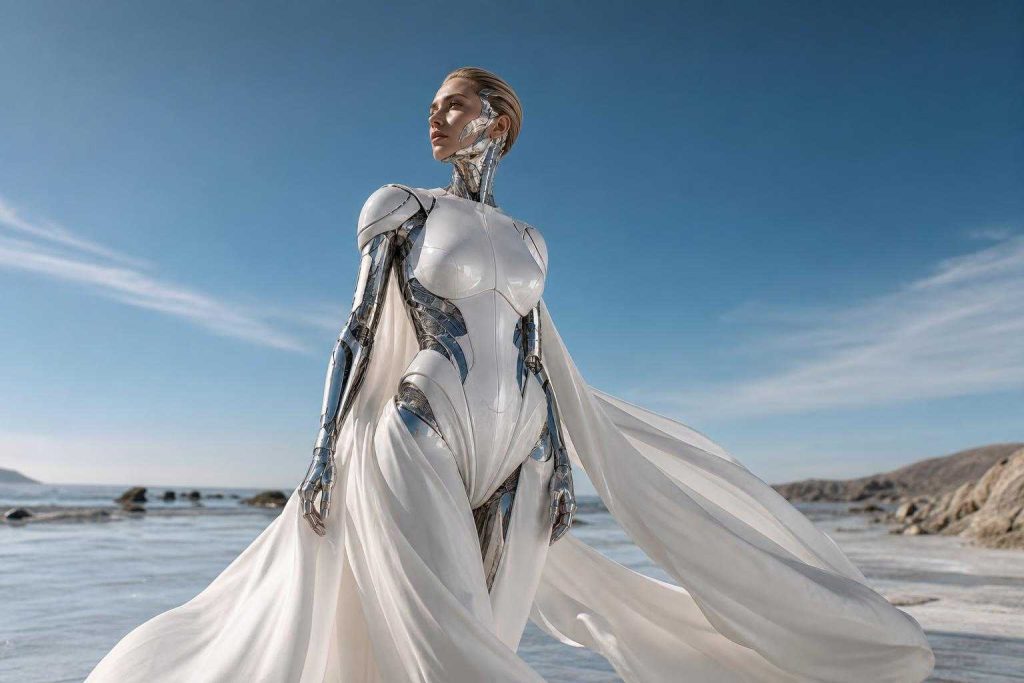
Why High-Growth Brands Are Investing in AI Creative Instead of Bigger Teams
There is a quiet shift happening inside the world’s most ambitious marketing departments. For years, the default answer to growth was simple: hire more people, add more specialists, build larger internal teams, and expand agency support. But in 2026, many of the fastest-moving companies are making a very different decision. Instead of automatically adding headcount, they are investing in AI creative.
Not because human talent matters less. It matters more than ever. But because the modern brand battlefield is no longer won by team size alone. It is won by speed, adaptability, content velocity, creative testing, and the ability to produce meaningful work across channels at the pace the market demands.
High-growth brands are asking a sharper question: if technology can help our best people think faster, build faster, test faster, and scale better, why would we solve every challenge by simply hiring more staff?
That question is changing the economics of marketing.
The Old Growth Model Is Breaking Under Pressure
Marketing used to follow a more predictable rhythm. A team could build a quarterly campaign plan, create a manageable number of assets, launch media, and optimize over time. Today, that approach is often too slow.
Brands now have to feed an always-on ecosystem: paid social, organic social, email, landing pages, sales enablement, short-form video, ad variants, product launches, localization, influencer support, customer retention content, and performance creative tailored for different audience segments. Add to that the demand for personalization, testing, and platform-specific execution, and it becomes clear why traditional team structures feel stretched.
Hiring more people seems logical at first. But bigger teams also bring more layers, meetings, approvals, handoffs, management complexity, and cost. Growth can actually become harder, not easier, when every new challenge is solved with more headcount.
The scaling paradox
The paradox is this: as demand for creative output rises, many teams become less agile when they expand in conventional ways. More briefs. More revisions. More stakeholders. More bottlenecks. More waiting.
That is one reason many executives are rethinking marketing operations. According to McKinsey’s research on the state of AI, organizations are increasingly seeing measurable business value from AI deployment, especially in marketing and sales. The implication is powerful: growth is no longer just about adding labor, but about redesigning how work happens.
AI Creative Is Not Just About Efficiency. It Is About Strategic Advantage
Too many people still think of AI as a tool for cutting time on repetitive tasks. That is part of the story, but it is not the most exciting part. The real advantage is strategic.
AI creative helps brands move from limited-output marketing to scalable, insight-driven, high-frequency execution. It can support idea generation, audience segmentation, visual iteration, copy exploration, campaign adaptation, workflow acceleration, and testing at a scale that would be difficult for traditional teams to match on their own.
What becomes possible
Imagine a brand that used to launch five ad concepts per month and can now test fifty. Imagine a social team that can rapidly repurpose one campaign idea into platform-native assets for Instagram, LinkedIn, YouTube, TikTok, email, and landing pages. Imagine a product marketing unit that can localize messaging across regions in days rather than weeks. Imagine a performance team getting creative variations fast enough to optimize before media spend is wasted.
That is what AI-driven marketing changes. Not just how quickly creative is produced, but how intelligently brands can learn from the market while campaigns are still live.
“The future of marketing is not more content for the sake of it. It is better systems for finding the content that works.”
That is exactly why leading brands are investing in AI creative operations, not just larger departments.
Why Bigger Teams Are No Longer the Automatic Answer
Hiring is important. Great people build great brands. But relying only on team expansion creates structural issues that can hold growth back.
1. Bigger teams increase overhead
Every hire adds salary, onboarding, management time, communication load, and process complexity. If your workflow is already strained, more people do not always fix the problem. Sometimes they magnify it.
2. Market speed has outpaced traditional production
Consumer preferences move quickly. Platform trends shift weekly. Paid media needs fresh creative constantly. If your production model cannot keep up, opportunities disappear before your campaign is even approved.
3. Testing matters more than intuition alone
The highest-performing brands are not guessing their way to results. They are testing messages, formats, visuals, hooks, calls to action, and audience angles. AI makes that iterative process dramatically more practical.
4. Talent should not be trapped in low-value tasks
Your best strategists, designers, and marketers should be doing high-value thinking, not drowning in repetitive versioning work. AI tools for creative teams can reduce manual drag and free experts to focus on concept quality, brand story, customer insight, and commercial impact.
The Financial Logic Is Hard to Ignore
For CFOs and growth leaders, the case is increasingly compelling. AI creative investment often offers a more flexible and scalable model than permanent team expansion alone. It can help reduce production costs per asset, accelerate time to market, and improve the ratio between media spend and creative output.
That matters because creative fatigue is expensive. Delayed testing is expensive. Slow campaign adaptation is expensive. Wasted ad spend on underperforming assets is expensive.
When brands can generate and refine more high-quality creative, they get more chances to find the combinations that perform. And performance gains, even small ones, can compound quickly across paid channels.
Evidence from Deloitte’s AI research and PwC’s analysis of AI’s economic potential points toward a larger pattern: businesses that strategically adopt AI can improve productivity, unlock new value, and strengthen competitive positioning.
Where High-Growth Brands Are Using AI Creative Right Now
AI creative is not one single tool or tactic. It is a broad capability stack, and the smartest brands are weaving it into specific parts of the customer journey.
Performance ad iteration
Teams are using AI to produce multiple headline options, visual directions, offer framings, and audience-tailored variants for testing. This allows significantly more experimentation without proportionally increasing timelines.
Content repurposing at scale
A single webinar, product launch, or campaign theme can become dozens of assets: social snippets, blog angles, email sequences, short videos, ad copy, sales collateral, and landing page variations. AI helps speed up the transformation process while humans maintain strategic and editorial control.
Faster concept development
Early-stage ideation can move far faster when teams use AI to explore territory, alternatives, or unexpected creative combinations. Great creative leaders do not use AI to avoid thinking. They use it to widen the field of possibility.
Localization and personalization
Brands entering new markets can adapt messaging more quickly, while retaining a clear core narrative. This is especially important in global campaigns where consistency matters, but local relevance wins results.
Creative operations and workflow support
AI is also reshaping process management: organizing briefs, summarizing insights, accelerating drafts, identifying patterns from campaign data, and helping teams prioritize what to produce next.
A Quick Comparison: Bigger Team vs AI-Enhanced Creative Model
| Growth Model | Strengths | Limitations |
|---|---|---|
| Bigger Traditional Team | More human capacity, deeper specialization, internal knowledge growth | Higher fixed costs, slower approvals, more complexity, harder to scale output quickly |
| AI-Enhanced Creative Model | Faster iteration, higher content velocity, scalable testing, reduced manual bottlenecks | Requires clear strategy, governance, quality control, and strong human oversight |
The Human Edge Is Becoming More Valuable, Not Less
One of the most important truths in this conversation is often missed: the rise of AI does not make human creativity irrelevant. In many ways, it makes it even more valuable.
Why? Because when production accelerates, judgment becomes the differentiator.
AI can generate options. Humans decide which ones are strategically right. AI can help draft. Humans shape the emotional truth. AI can expand output. Humans protect brand identity, customer empathy, and commercial coherence.
The brands that will dominate are not those that hand everything to machines. They are the ones that combine human insight with AI capability in a disciplined way.
The new premium skill set
The most valuable marketing teams now combine strategic thinking, creative leadership, systems design, experimentation, and AI fluency. That combination is powerful because it allows a brand to move fast without becoming generic.
This is reflected in broader industry analysis too. The Gartner perspective on generative AI in marketing points to transformation not just in output, but in how marketing functions are structured and optimized.
The Risk of Doing Nothing Is Growing
There is another side to this conversation, and it is uncomfortable but necessary: what happens if your competitors are building AI-enhanced creative systems while you are still relying on the old model?
They may test more than you. Learn faster than you. Refresh ads more often than you. Personalize at greater scale than you. Enter new channels more quickly than you. Adapt to audience behavior before you even spot the trend.
In growth markets, delay is not neutral. Delay becomes disadvantage.
Ask the hard question
If your team is already under pressure, if campaign demand is expanding, if paid performance depends on fresh creative, and if your competitors are accelerating, why not get the solution?
Why continue investing only in structures that were built for a slower era?
Why not equip your team with a model that makes brilliant people even more effective?
What Smart Implementation Actually Looks Like
Not every AI investment creates value. The strongest results come when brands apply AI creatively and operationally with purpose.
It starts with business goals
Are you trying to increase testing velocity? Reduce campaign production time? Improve return on ad spend? Expand content output? Support a lean internal team? Successful implementation starts with the commercial outcome, not the tool itself.
It needs brand governance
AI creative should operate within clear brand standards, tone of voice rules, approval systems, and legal considerations. The goal is not chaos at scale. The goal is quality at scale.
It works best with expert guidance
Many brands know AI matters, but they are unsure how to integrate it without diluting quality. That is where specialist support becomes decisive. A strategic creative partner can help define workflows, select the right use cases, protect the brand, and turn AI into measurable growth rather than scattered experimentation.
“AI is not the strategy. It is the amplifier. If your strategy is strong, the results can be extraordinary.”
That is why partnering with experts matters.
Why Brandlab Is the Conversation Growth Leaders Should Be Having
This is exactly where a forward-looking partner like Brandlab becomes incredibly valuable.
Because the challenge is not simply creating more content. It is building a growth-ready creative system that blends brand thinking, performance marketing, AI capability, and commercial practicality. It is about understanding where AI can have the greatest impact, what should stay deeply human, and how to design a workflow that gets real results.
Brandlab can help brands move past the hype and into execution. That means understanding your audience, sharpening your positioning, accelerating production, testing smarter creative, and building a model fit for modern growth.
What that can unlock
- Faster campaign launches
- Higher creative output without bloated overhead
- Better testing frameworks
- Stronger use of internal talent
- More adaptable brand systems
- Greater confidence in scaling marketing
If your brand wants to grow without becoming slower, more fragmented, or more expensive to operate, this is the moment to rethink the model.
The Future Belongs to Brands That Build Creative Leverage
The companies that stand out over the next few years will not necessarily be the ones with the biggest departments. They will be the ones with the best creative leverage. The ones that know how to turn strategy into output, output into testing, testing into learning, and learning into growth.
That is why high-growth brands are investing in AI creative instead of simply building ever-larger teams. They understand something fundamental: growth today belongs to organizations that can combine human brilliance with intelligent systems.
And that creates a very practical question for every ambitious business leader reading this:
If a smarter, faster, more scalable creative model is now possible, why not get the solution?
The opportunity is here. The tools are here. The market is moving. Your competitors are not waiting.
Now is the time to contact Brandlab and explore what an AI-enhanced creative model could make possible for your brand.
Evidence and Further Reading
For readers who want trusted third-party evidence behind the trends discussed here, these articles and reports are useful starting points:
- McKinsey — The State of AI
- Gartner — How Generative AI Will Transform Marketing
- Deloitte — AI Upscaling and Enterprise Value
- PwC — Sizing the Prize: What’s the Real Value of AI for Your Business?
- IBM — Global AI Adoption Index
The future of creative growth is not about choosing between people and technology. It is about building the right system for both to thrive.
So why not make that move now? Contact Brandlab and start designing a creative engine built for the next stage of growth.
166892