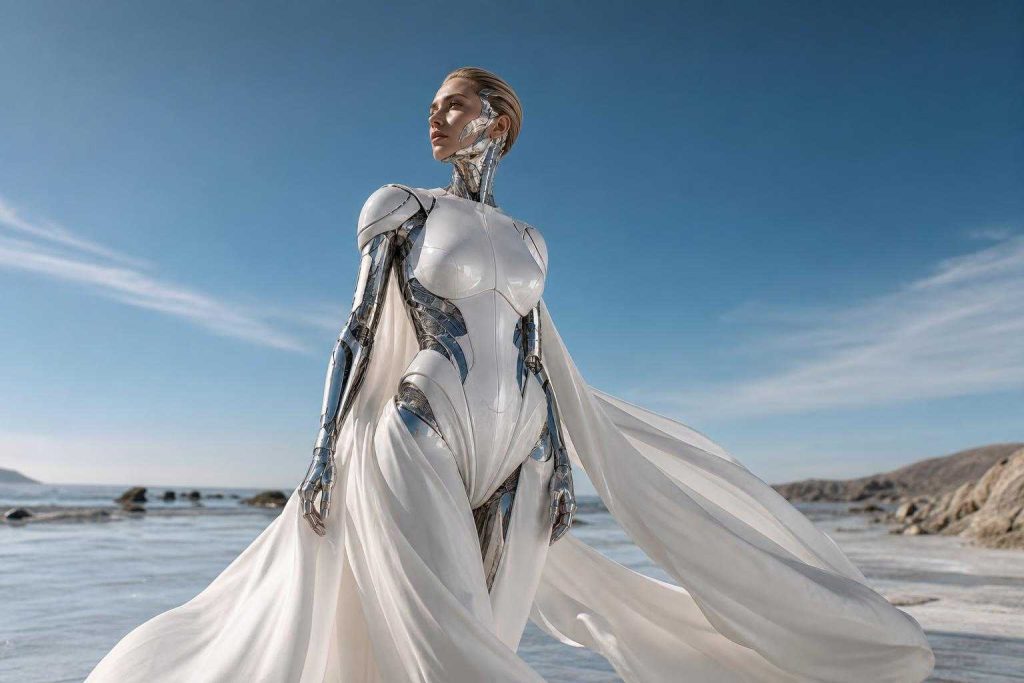
How Fashion CEOs Are Using AI to Increase Sales Without Increasing Marketing Spend
For fashion leaders, the pressure is relentless: grow revenue, protect margin, strengthen customer loyalty, and do it all without inflating acquisition costs. In a market defined by volatility, discount fatigue, shifting consumer behavior, and rising operational complexity, one question is rising to the top of every boardroom agenda: How can a fashion brand increase sales without increasing marketing spend?
The answer is becoming impossible to ignore. Artificial intelligence in fashion retail is no longer a futuristic side project. It is now a practical growth engine used by ambitious brands to improve conversion rates, personalize shopping journeys, forecast demand more accurately, optimize pricing, reduce returns, and make every pound or dollar of existing marketing budget work harder.
What makes this shift so powerful is not simply automation. It is precision. AI allows fashion CEOs to move from broad assumptions to real-time decision-making. Instead of spending more to reach more people, brands can use AI to better understand the people they already reach, identify buying signals faster, and create experiences that lift sales at exactly the right moment.
That is why the conversation has changed. The smartest fashion executives are no longer asking whether AI matters. They are asking: Where can AI unlock revenue fastest? Which journeys should be optimized first? How do we implement it without disrupting the brand experience?
In this article, we explore how leading fashion CEOs are using AI to increase fashion sales without raising marketing investment, what tools and strategies are proving most effective, and why now is the moment to turn AI from a buzzword into a commercial advantage.
Why AI Has Become a Board-Level Growth Strategy in Fashion
Fashion is an industry built on timing, taste, and demand prediction. Yet for years, most decision-making has been slowed by fragmented systems, lagging reports, and intuition-led planning. AI changes that. It enables faster pattern recognition across customer behavior, inventory movement, product performance, and channel efficiency.
For CEOs, that means one thing above all: better growth without proportional cost growth.
The margin reality facing fashion brands
Customer acquisition costs remain high across digital channels. Paid social is crowded. Search is competitive. Discounting erodes brand value. Returns continue to eat into profitability. And while traffic can sometimes be bought, margin cannot be manufactured so easily. This is exactly why AI is moving from innovation teams into the strategic center of the business.
Instead of increasing spend to chase uncertain outcomes, AI helps fashion brands improve the return on existing spend by identifying what is already converting, what customers are most likely to buy next, and where hidden friction is suppressing revenue.
AI turns existing traffic into greater revenue
If your website already attracts qualified visitors, your email database already holds thousands of customer records, and your merchandising team already reviews product performance, then growth may be closer than you think. AI can activate the value inside these assets. Better product recommendations, predictive segmentation, dynamic search, personalized promotions, and inventory-aware selling can all help boost sales from traffic you already paid to acquire.
This is where the opportunity becomes exciting. You do not always need more attention. You need more commercial intelligence.
How Fashion CEOs Are Using AI to Increase Sales
1. Personalization that actually converts
One of the most visible uses of AI in fashion ecommerce is personalization. But the real value is not cosmetic. It is commercial. AI can analyze browsing behavior, purchase history, price sensitivity, location, size preference, and category interest to create more relevant shopping experiences in real time.
Instead of showing every visitor the same homepage, the same collection, or the same promotional banner, AI can help brands tailor content to likely buyer intent. A returning customer who frequently shops premium knitwear can be shown new arrivals in that category. A first-time visitor coming from a “summer wedding guest dress” search query can be directed toward occasionwear immediately. A shopper who abandoned a cart with trainers may receive a recommendation for matching accessories or a low-friction return-to-cart journey.
According to McKinsey research on personalization, companies that excel at personalization generate more revenue from those activities and improve customer satisfaction. In fashion, where style relevance and timing are everything, the impact can be even more significant.
2. Smarter product recommendations increase basket size
Every fashion CEO wants to improve average order value without relying on deeper discounts. AI-powered recommendation engines can do exactly that. By identifying what customers with similar behavior purchased together, what products are often co-viewed, and what style combinations convert best, AI can surface more persuasive cross-sell and upsell opportunities.
This is not just “you may also like.” When done well, it becomes a strategic sales tool. Customers see outfit logic rather than random alternatives. Product discovery improves. The path to purchase becomes easier. And the revenue impact can be substantial.
Amazon has long demonstrated the power of recommendation systems, and the broader principle is widely acknowledged across commerce strategy. For fashion brands, where styling inspiration drives purchase behavior, recommendation intelligence can be a direct lever for higher basket value.
3. AI-powered search helps shoppers find what they mean, not just what they type
A surprising amount of revenue is lost through poor onsite search. Customers search for “black satin midi dress for wedding,” “oversized beige blazer,” or “quiet luxury handbag,” and many ecommerce sites still fail to understand context, material, intent, or styling language. AI-enhanced search solves that problem.
Natural language processing allows search tools to interpret nuance, synonyms, and shopper intent. Visual search goes even further, allowing a customer to upload an image and find similar products. This reduces friction dramatically and improves conversion from existing website traffic.
Shopify enterprise analysis on ecommerce personalization highlights how relevant experiences influence buying behavior. In fashion, search relevance is one of the fastest ways to create those experiences.
4. Demand forecasting reduces stockouts and missed revenue
One of the most profitable ways to increase sales without increasing marketing spend is simply to have the right stock available at the right time. Too many brands lose revenue because bestselling sizes run out, trend demand is underestimated, or replenishment decisions lag behind the market.
AI demand forecasting in fashion combines historical sales data with trend signals, seasonality, regional behavior, pricing changes, and promotional patterns to predict future demand more accurately. This allows CEOs and trading teams to align buying, allocation, and replenishment decisions more effectively.
The commercial benefit is twofold. First, you avoid lost sales from stockouts. Second, you reduce markdown pressure caused by overbuying in weaker categories. Both outcomes lift revenue quality without requiring extra media spend.
McKinsey’s State of Fashion insights repeatedly point to inventory discipline and operational agility as crucial profitability levers for fashion brands.
5. Dynamic pricing protects margin and stimulates demand intelligently
Many fashion businesses still use rigid markdown calendars. But consumer demand rarely behaves in rigid ways. AI allows brands to use more intelligent pricing decisions based on product velocity, competitor benchmarking, customer demand, sell-through rates, and stock levels.
This does not mean chaotic pricing. It means informed pricing. CEOs can identify where full-price demand remains strong, where a targeted incentive may unlock conversion, and where broad markdowns are unnecessarily sacrificing margin.
In a climate where excessive discounting can damage both profitability and brand equity, AI offers a more nuanced route. Better pricing decisions create revenue growth that feels earned, not bought.
Where the Biggest Hidden Sales Gains Often Sit
Email and CRM optimization
Most fashion brands are sitting on underused CRM potential. AI can segment customers not only by past purchase but by predicted behavior: likelihood to buy, churn risk, category affinity, spending potential, and preferred timing. That means email and SMS campaigns become more relevant, more timely, and more profitable.
Why send the same campaign to everyone when AI can identify who is likely to respond to new arrivals, who is primed for replenishment, and who needs a loyalty nudge? This is how CEOs can increase revenue from owned channels while holding marketing spend flat.
Reducing returns with better product matching
Returns are often treated as an operations problem, but they are also a growth problem. High returns reduce net sales, weaken margin, and distort demand planning. AI can help reduce returns through better sizing recommendations, improved product descriptions, fit prediction, and customer guidance.
When a customer is more confident about fit and suitability before buying, conversion improves and return rates can fall. That means more revenue retained from the same sales volume.
Deloitte retail insights continue to emphasize efficiency, customer experience, and technology as critical differentiators in modern retail growth.
Merchandising intelligence
AI can help merchandising teams spot patterns humans miss: rising color preferences, emerging silhouettes, regional product winners, and combinations of products that perform strongly together. This improves assortment planning and trading decisions. Instead of relying entirely on post-season analysis, brands can respond during the season, while the revenue opportunity is still active.
A Practical View: What This Can Look Like in Numbers
Below is a simple illustration of how AI can improve performance without adding marketing budget. Exact results vary, but the framework shows why CEOs are paying attention.
| Growth Lever | Without AI | With AI | Commercial Impact |
|---|---|---|---|
| Onsite conversion | Generic journey | Personalized experience | More sales from same traffic |
| Average order value | Basic cross-sell | AI recommendations | Higher basket size |
| CRM revenue | Broad campaigns | Predictive segmentation | Better response rates |
| Inventory efficiency | Manual forecasting | AI demand prediction | Fewer stockouts, fewer markdowns |
| Net revenue retention | High return rates | Fit and intent optimization | More revenue kept |
Why This Matters So Much Right Now
The era of easy growth is over
Fashion businesses are operating in a more demanding commercial environment. Consumers want relevance, speed, confidence, and value. At the same time, leadership teams want profitability, not vanity growth. This is exactly why AI for fashion brands is resonating so strongly at executive level. It promises growth through better decisions, not simply bigger budgets.
Customer expectations are now shaped by the best experiences anywhere
Your customer does not compare your website only to your direct competitors. They compare it to the best digital experiences they encounter anywhere. Fast discovery, relevant recommendations, intuitive journeys, flexible service, and personal relevance are no longer exceptional. They are expected.
If your brand fails to deliver them, even strong creative and excellent products can be undermined by poor digital execution. AI helps close that gap.
The Questions Fashion CEOs Should Be Asking
Where are we losing revenue in the current journey?
Is it poor search? Low conversion on mobile? Underperforming product recommendations? High cart abandonment? Missed repeat purchase opportunities? Stockouts in core categories? Returns in fit-sensitive products? AI works best when directed toward high-friction, high-value points in the customer journey.
What data do we already have that we are not using well?
Many brands already hold the ingredients for meaningful AI improvement: transaction history, traffic sources, product data, return patterns, engagement metrics, and customer profiles. The issue is not a lack of data. It is a lack of orchestration.
How quickly can we prove value?
The strongest AI programs usually start with focused use cases that prove commercial impact quickly. Personalized product recommendations. Predictive email segmentation. Smarter search. Return reduction in a high-volume category. Once value is demonstrated, broader transformation becomes easier to support across the business.
What Winning Brands Understand About AI
AI is not replacing brand instinct, it is sharpening it
The best fashion brands do not use AI to become generic. They use it to express their brand more intelligently. A luxury label can use AI to refine high-touch personalization. A contemporary brand can improve product discovery. A value retailer can optimize stock and reduce returns. The technology should support the commercial expression of the brand, not flatten it.
Execution matters more than hype
There is a lot of noise around AI. Not all of it leads to revenue. The brands that win are those that connect AI to specific business outcomes: higher conversion, better customer retention, more accurate forecasting, fewer markdowns, higher average order value, and improved profitability.
Why Now Is the Time to Act
If competitors are already using AI to improve personalization, optimize pricing, sharpen forecasting, and reduce friction, what happens if your brand waits? What revenue is quietly being left on the table each month? Which customers are slipping away because your digital journey feels less relevant than the next option in their browser?
And perhaps the most important question: why not get the solution?
If the opportunity is to increase sales without increasing marketing spend, protect margin while improving customer experience, and build a more intelligent growth model for the future, then delay becomes expensive. Not dramatic. Just expensive in the quiet, cumulative way that missed conversion, weak retention, and unnecessary markdowns always are.
What’s Possible with the Right Partner
The opportunity is not simply to “use AI.” It is to use it in a way that fits your commercial model, technical reality, and brand ambition. That requires strategy, prioritization, integration thinking, and a clear view of where value can be unlocked fastest.
This is where Brandlab can help. Whether your fashion business wants to improve ecommerce conversion, unlock more value from CRM, explore AI-powered personalization, reduce returns, or build a sharper growth roadmap, the right approach starts with identifying the highest-impact opportunities first.
Fashion CEOs are already using AI-driven growth strategies to convert more traffic, lift basket value, improve forecasting, and retain more revenue. If your brand is ready to explore what is possible, get in contact with Brandlab and start the conversation.
The Bottom Line
How Fashion CEOs Are Using AI to Increase Sales Without Increasing Marketing Spend is no longer just an interesting trend topic. It is a practical leadership question with measurable answers. AI helps brands generate more value from existing traffic, data, inventory, and customer relationships. It improves decisions. It sharpens relevance. It increases efficiency. And most importantly, it creates a pathway to sales growth that does not depend on endlessly expanding ad spend.
The fashion brands that move decisively now will not just be more efficient. They will be more responsive, more customer-centric, and more commercially resilient. So ask yourself: if growth is possible through smarter systems rather than larger budgets, what is stopping your brand from acting now?
Contact Brandlab and discover how AI can help your fashion business sell more, waste less, and grow with greater confidence.
165736