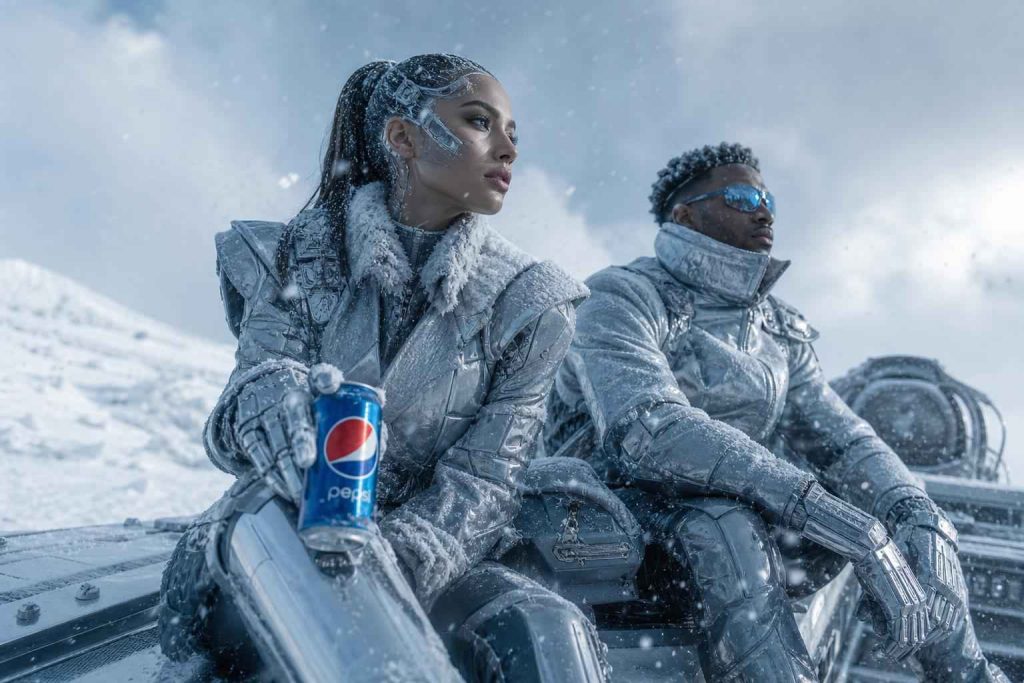
What McDonald’s CMO Knows About Co-Marketing That Most Brands Miss
Focused keyphrase: What McDonald’s CMO Knows About Co-Marketing That Most Brands Miss
Related high-search keywords: co-marketing strategy, brand partnerships, strategic marketing collaboration, joint marketing campaigns, customer acquisition strategy, brand growth, marketing ROI, consumer loyalty
Some partnerships make noise. Others make history.
That difference is where the real lesson lives. And if you look closely at the world’s most recognized brands, one truth becomes impossible to ignore: the best co-marketing is never just about exposure. It is about relevance, psychology, timing, cultural fit, commercial leverage, and building a story so strong that both brands become more powerful together than they ever were apart.
That is the opportunity many businesses still miss.
McDonald’s, through decades of global partnerships, promotions, licensing collaborations, entertainment tie-ins, menu innovation, and cultural moments, has demonstrated something profound about co-marketing strategy: winning partnerships are not random. They are engineered. They are chosen with discipline. They are activated with precision. And they work because they understand people better than most brands understand themselves.
So what does a leading CMO-level perspective reveal about co-marketing that others overlook?
Quite a lot.
The Real Co-Marketing Insight: Shared Attention Is Not the Goal
Too many businesses think co-marketing begins and ends with audience overlap. If another brand has reach, influence, or credibility, the logic seems simple: partner up and gain visibility.
But visibility alone is not a strategy.
The more important question is this: does the partnership create a stronger reason to buy, believe, join, remember, or return?
That is where sophisticated brands separate themselves from hopeful ones.
McDonald’s has long understood that brand partnerships work best when they reduce risk for the customer while increasing excitement. In plain terms, a customer should instantly feel, “This makes sense,” and at the same time, “This feels fresh.” That combination—familiarity plus novelty—is one of the most powerful drivers in modern marketing.
If your brand partnership creates surprise without clarity, people scroll past it. If it creates logic without emotional energy, people forget it. The sweet spot is a collaboration that feels inevitable in hindsight and exciting in the moment.
Why that matters more than most marketers admit
Customers are overloaded with campaigns, content, and promotional claims. They do not need another logo mashup. They need a reason to care. Effective joint marketing campaigns answer an emotional and commercial need at the same time.
That may mean:
- Making a product more desirable
- Making the purchase decision easier
- Adding cultural relevance
- Creating urgency
- Expanding reach into adjacent customer groups
- Increasing trust through association
When McDonald’s enters cultural partnerships, family campaigns, digital loyalty plays, or entertainment-driven promotions, the underlying principle is not “more ads.” It is more meaning per interaction.
What Most Brands Miss About Co-Marketing
Here is the overlooked truth: great co-marketing is less about combining assets and more about combining identities.
That sounds abstract. It is not.
Every brand lives in the mind of the customer as a set of meanings. Fast. Premium. Fun. Trusted. Youthful. Smart. Ethical. Convenient. Aspirational. Affordable. When two brands come together, they do not simply pool budgets. They transfer meaning.
This is why some partnerships explode with momentum while others fall flat.
The hidden variable is brand psychology
If one brand stands for reliability and another stands for innovation, the collaboration can create a compelling new value narrative. If one brand stands for indulgence and another stands for accessibility, the right activation can broaden appeal without losing core identity.
But if the partnership creates confusion—if customers cannot quickly understand why the two belong together—the campaign is already struggling.
McDonald’s scale gives it extraordinary power, but scale alone is not the lesson. The lesson is this: successful co-marketing feels strategically obvious to the customer, even if it took months of planning behind the scenes.
“Partnerships do not create value because two logos appear together. They create value when each brand helps the other become more useful, more memorable, or more culturally important.”
The McDonald’s Playbook: Co-Marketing as a Growth Multiplier
When you study major global brands, one pattern becomes clear. The most effective partnerships do at least one of four things exceptionally well:
| Co-Marketing Objective | What It Delivers | Why It Matters |
|---|---|---|
| Audience Expansion | Access to new or adjacent customer groups | Improves acquisition without building trust from zero |
| Cultural Relevance | Stronger shareability and social conversation | Keeps the brand part of current consumer attention |
| Commercial Lift | Sales spikes, bundle value, repeat purchases | Turns brand buzz into measurable revenue |
| Brand Reframing | Freshens perceptions without a full repositioning | Helps brands stay modern and resilient |
That is where a mature co-marketing strategy becomes transformational. It does not just create a campaign. It creates leverage.
Leverage is what your brand should be chasing
The strongest partnerships help you achieve something faster, more credibly, or more efficiently than you could achieve alone. That might be market entry. Better storytelling. New customer trust. Product adoption. Loyalty growth. Media efficiency. Retail excitement. Social proof.
And this is where many businesses leave money on the table. They enter partnerships too tactically. A quick promotion. A shared email. A one-off social post. A limited offer with no strategic backbone.
But why settle for a short-lived activation when you could build a collaboration platform that compounds value?
Co-Marketing Works Best When It Answers Three Questions
Before any serious partnership goes live, smart brands pressure-test the concept hard. Not because they fear risk, but because they understand the cost of irrelevance.
1. Why this partner?
If the answer is only reach, think again.
The right partner should contribute one or more of the following:
- Trust your brand does not yet own
- Audience access that aligns with commercial goals
- Cultural credibility that raises your relevance
- Product synergy that improves the customer experience
- Distribution advantages that remove friction
2. Why now?
Timing is often the decisive factor. The best collaborations meet a moment—seasonal, cultural, behavioral, or economic. A campaign launched at the wrong time can underperform even if the strategic idea is good.
McDonald’s has repeatedly shown the power of timing in promotions, menu launches, entertainment links, and digital engagement cycles. The implication for your brand is simple: timing is not a scheduling detail. It is a growth variable.
3. Why should the customer care?
This is the biggest one. If the answer is vague, the market response will be weak.
The customer must gain something obvious:
- Better value
- Better experience
- Better identity alignment
- Better convenience
- Better access
- Better emotion
Any collaboration that fails to improve one of those is probably more exciting in the boardroom than in the real world.
Evidence the Market Already Knows This
Research consistently shows that trust, relevance, and customer experience shape partnership success more than sheer promotional noise.
For example:
- Nielsen has long reported that trust in brands and recommendations materially influences consumer behavior, reinforcing why partner credibility matters in joint campaigns. Evidence: Nielsen Insights
- HubSpot regularly highlights how strategic partnerships and co-marketing can improve reach and lead generation when aligned to buyer needs. Evidence: HubSpot on Co-Marketing
- Think with Google documents how consumer expectations, convenience, and relevance drive modern purchase behavior. Evidence: Think with Google
- McKinsey has extensively covered how brand growth increasingly depends on customer-centricity, ecosystem thinking, and differentiated experiences. Evidence: McKinsey Growth, Marketing & Sales Insights
These are not marginal ideas. They are signals from the market that winning brands are already acting on.
The Brands That Win Know Co-Marketing Is a System, Not a Stunt
One of the most valuable lessons hidden in high-performing collaborations is that co-marketing is not a decorative tactic. It is part of a wider growth system.
That system includes:
- Brand strategy
- Audience intelligence
- Offer design
- Campaign planning
- Channel coordination
- Creative consistency
- Performance measurement
What goes wrong when brands skip the system
They partner with brands that look glamorous but do not convert. They create campaigns that generate likes but not lift. They confuse attention with traction. They judge success too early, or too narrowly. They fail to build from one success to another.
In contrast, the most effective brands ask:
- What strategic gap does this partnership solve?
- What specific audience behavior are we trying to shift?
- How will we measure success across awareness, engagement, conversion, and loyalty?
- How can this partnership become more than a one-off moment?
These are the questions that move co-marketing from “interesting” to commercially powerful.
What This Means for Ambitious Brands Right Now
If you are growing a brand in a crowded market, you do not need more random activity. You need aligned momentum.
You need partnerships that sharpen your positioning, not blur it.
You need collaborations that produce measurable demand, not just stylish presentation decks.
You need the kind of strategy that makes customers say, “Of course these brands go together,” and then act on that feeling.
Think about your own market for a moment
Are there adjacent brands your customers already trust?
Are there cultural spaces where your brand belongs but has not yet shown up?
Are there partnerships that could reduce buyer hesitation, elevate perception, or create new demand faster than solo campaigns?
Are you sitting on unrealized brand equity because no one has designed the right collaboration model yet?
These are not theoretical questions. They are growth questions.
“The smartest partnerships are not built to look impressive in a meeting. They are built to make the customer say yes faster.”
How Brandlab Can Help You Build a Smarter Co-Marketing Strategy
Many businesses can see the opportunity in brand partnerships. Far fewer know how to shape that opportunity into a high-performance growth engine.
That is where strategic guidance matters.
Brandlab can help turn loose partnership ideas into a disciplined, commercially effective co-marketing strategy—one grounded in positioning, market fit, audience insight, creative coherence, and measurable outcomes.
What a smarter engagement could look like
- Identifying the right-fit co-marketing partners
- Clarifying strategic objectives before activation
- Designing offers and campaign narratives customers immediately understand
- Building integrated plans across digital, brand, content, and performance channels
- Creating stronger measurement models for marketing ROI
- Turning one collaboration into a repeatable brand-growth framework
This matters because the cost of getting partnerships wrong is not just wasted spend. It is lost momentum, diluted positioning, internal confusion, and missed market windows.
So ask yourself honestly: why not get the solution?
If the market is crowded, if growth is harder to earn, if attention is more expensive than ever, and if customer trust takes time to build—why would you leave high-value strategic partnerships to guesswork?
What Is Possible When You Get Co-Marketing Right
When done expertly, co-marketing can help you:
- Enter new markets with more confidence
- Boost awareness with better-quality attention
- Improve perceived value without racing to discount
- Create standout campaigns with built-in memorability
- Increase conversions through borrowed trust
- Strengthen consumer loyalty through richer brand experiences
- Reposition your brand with more credibility and less friction
That is the real promise
Not just a campaign. Not just a collaboration. A smarter path to growth.
This is the insight many brands miss when they look at giants like McDonald’s. They see scale, budget, and fame. What they should be seeing is strategic discipline. The power is not just in doing partnerships. The power is in understanding exactly why those partnerships work.
And once you understand that, new possibilities open.
Your brand does not have to copy a global fast-food giant to apply the lesson. It simply has to think more clearly about what partnerships are for, what customers value, and where combined meaning can create competitive advantage.
The Final Question Every Brand Leader Should Ask
If another brand could help you become more relevant, more trusted, more visible, more desirable, and more commercially effective—what are you waiting for?
Because that is what the best co-marketing does.
It does not just add volume. It adds force.
It does not just increase awareness. It increases belief.
It does not just create activity. It creates movement.
And in a market where attention is fragmented and loyalty is competitive, that difference can change everything.
If your business is serious about building a co-marketing strategy that creates relevance, reach, and results, it may be time to speak with Brandlab. The right collaboration could unlock your next wave of growth.
Why not get the solution—and start the conversation now?
Strong brands rarely grow by accident. They grow because they recognize leverage when they see it, and act before the market catches up.
Brandlab can help you do exactly that.
167173