From UI to Intelligence: Why the Next Generation of Design Thinks, Learns, and Evolves
There was a time when digital design was judged mostly by its surface: color harmony, clean navigation, polished iconography, intuitive buttons. A great interface felt effortless, and that was enough. Today, that standard is no longer sufficient. The most consequential products are no longer static systems that wait for people to click, tap, and scroll. They are becoming responsive organisms—software environments that observe behavior, infer intent, adapt over time, and increasingly participate in decision-making.
The shift from traditional user interface design to intelligent design systems marks one of the most important transitions in the history of digital products. In this new era, great design is not just about arranging elements on a screen. It is about shaping systems that can learn, personalize, anticipate, and evolve responsibly. The experience is no longer only visual; it is behavioral, predictive, and dynamic.
This transformation is being accelerated by breakthroughs in artificial intelligence, the maturation of design systems, the rise of real-time analytics, and changing expectations from users who now assume that digital products should “know” them. Consumers expect recommendations to improve, workflows to simplify themselves, and interfaces to become more useful with repeated use. Businesses, meanwhile, expect design to support measurable outcomes such as engagement, retention, accessibility, and trust.
What emerges from this convergence is a new design philosophy: one in which interfaces are not fixed artifacts but evolving systems. This is the future of product creation, and it is already reshaping software, commerce, healthcare, education, mobility, and enterprise tools. The question is no longer whether design will become intelligent. The question is how designers, product teams, and organizations will build that intelligence with care.
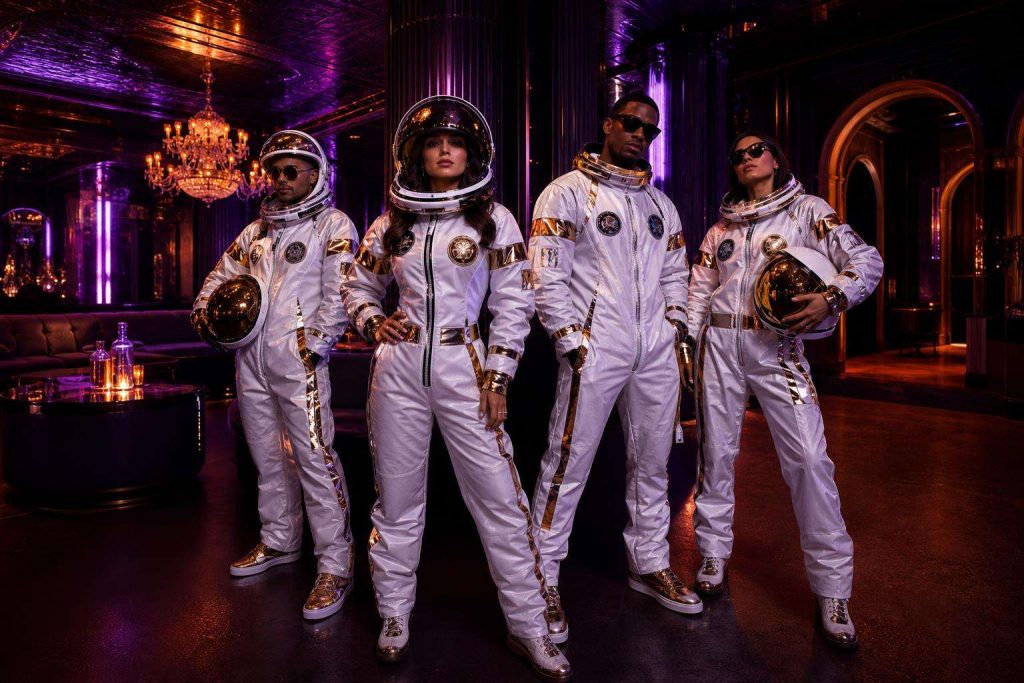
Image location: Hero illustration showing a modern digital interface transforming into an adaptive AI-driven system with flowing data layers. Reference: custom editorial visual inspired by trends documented by Nielsen Norman Group and Interaction Design Foundation.

The End of Static Interfaces
For decades, interface design operated on a relatively stable premise: users encountered the same screens, the same pathways, and roughly the same hierarchy of information each time they returned. Improvements came in version updates, A/B tests, and redesign cycles. The product changed slowly, intentionally, and often uniformly for everyone.
That model now feels increasingly outdated. Users inhabit environments defined by personalization. Streaming platforms adapt recommendations. Navigation tools recalculate routes in real time. Productivity systems suggest actions before they are explicitly requested. Search has become conversational. Commerce platforms reorder products based on context, history, and inferred preferences.
These experiences are moving beyond static UI into what might be called adaptive experience design. Instead of giving every user the same pathway, products now evaluate context—location, previous interactions, time, intent, device, and even environmental conditions—to shape what appears, when it appears, and how it is prioritized. According to research from McKinsey, effective personalization can significantly improve customer acquisition and retention, underscoring how deeply adaptive systems influence business performance.
Interfaces Are Becoming Behavioral Systems
Traditional UI answered the question: “How should this screen look and function?” Intelligent design adds another question: “How should this system respond as it learns?” That distinction is profound. It means designers are no longer shaping only layouts and journeys. They are shaping logic, rules, feedback loops, confidence thresholds, and user trust.
When an interface can change based on observed behavior, every design decision gains a temporal dimension. Designers must think not just about first use, but about repeated use. Not just about clarity, but about calibration. Not just about actions, but about adaptation. The interface becomes a living participant in the user journey.
“The best interfaces of the next decade may feel less like tools and more like collaborators—quietly capable, context-aware, and always improving.”
Why Intelligence Is Reshaping Design Practice
The integration of machine learning and artificial intelligence into products has expanded what design can do. Intelligence in design does not necessarily mean a chatbot in every corner or a flashy AI label on every feature. Often, it appears through subtle improvements: predictive search, dynamic content prioritization, adaptive onboarding, anomaly detection, language simplification, accessibility support, and next-best-action recommendations.
Prediction Changes the User Journey
When a product can predict what a person is likely to do next, the architecture of the experience changes. Complex workflows can be shortened. Repetitive tasks can be automated. Confusing steps can be reduced. This is particularly powerful in enterprise design, where tools often suffer from heavy complexity. Intelligent systems can reduce cognitive load by surfacing only what matters most in the moment.
Research from Gartner and broader enterprise studies consistently point toward AI-assisted workflows as a meaningful lever for productivity and decision support. In design terms, that means interfaces can shift from information delivery to decision augmentation.
Learning Creates Compounding Value
A static interface may be elegantly crafted, but its usefulness plateaus unless manually updated. A learning system, by contrast, can improve as it gathers signals. Recommendation engines can refine relevance. Writing tools can better understand tone and preference. Customer platforms can adapt to user maturity. Educational apps can personalize pacing. Health tools can detect patterns that matter before users can see them themselves.
This creates a new kind of product value: not just utility at launch, but utility that compounds. The more thoughtfully a system is designed to learn, the more differentiated it can become over time.
The New Role of the Designer
As interfaces become intelligent, the role of the designer expands significantly. Designers are no longer only visual communicators or interaction specialists. They are increasingly becoming orchestrators of behavior, ethics, systems thinking, and human-AI collaboration.
Designers Must Shape the Rules of Adaptation
If a system personalizes content, who decides what signals matter? If a recommendation engine changes priorities, who ensures it does not reinforce harmful patterns? If an onboarding flow adapts to skill level, how transparent should that adaptation be? These are design questions as much as technical ones.
Modern design teams must contribute to areas once perceived as outside classic design practice: data logic, model explainability, consent design, trust patterns, and failure-state communication. The designer’s task is no longer fully contained within a Figma board. It extends into product strategy, governance, and system behavior.
Design Systems Must Evolve into Intelligent Systems
Today’s strongest product organizations rely on design systems for consistency and speed. But tomorrow’s systems will need more than reusable components. They will require mechanisms for context-awareness and adaptation. A button library and typography scale are still essential, but they are not enough for experiences that change in real time.
An intelligent design system may include behavioral patterns for confidence-based recommendations, disclosure patterns for AI-generated outputs, fallback states when predictions fail, and accessible methods for correcting machine assumptions. This evolution is already implicit in guidance from institutions such as IBM Design for AI and Google PAIR, both of which emphasize human-centered frameworks for AI-powered products.